
Buy a 4th axis table or 5th axis rotary table for you CNC machine??
In recent years, with the rapid development of high-end manufacturing industry and economy, there has been a growing number of large, complex, and high-precision parts in mechanical equipment. 3-axis CNC machine tools face issues such as low processing efficiency, the need for multiple clampings, and can not ensure precision, making it difficult to meet the demands of high-end CNC manufacturing. These issues can be addressed by equipping the machines with CNC rotary tables
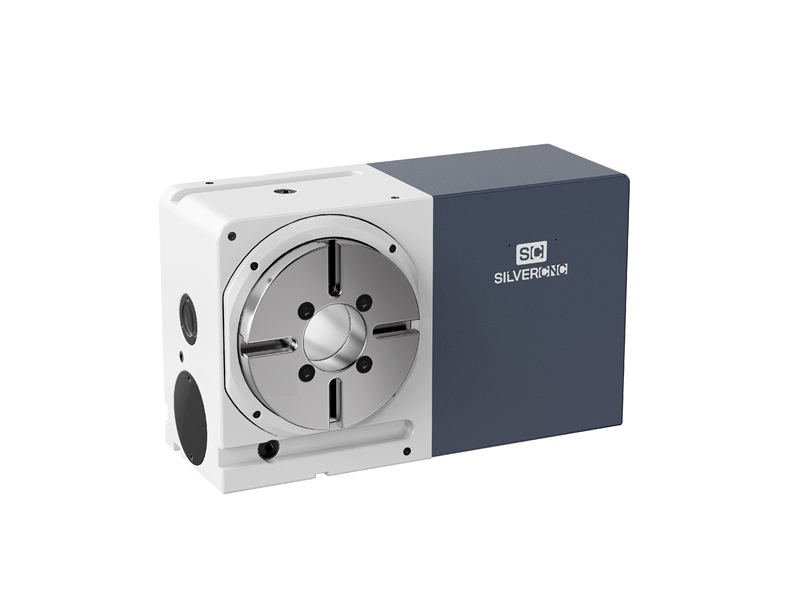
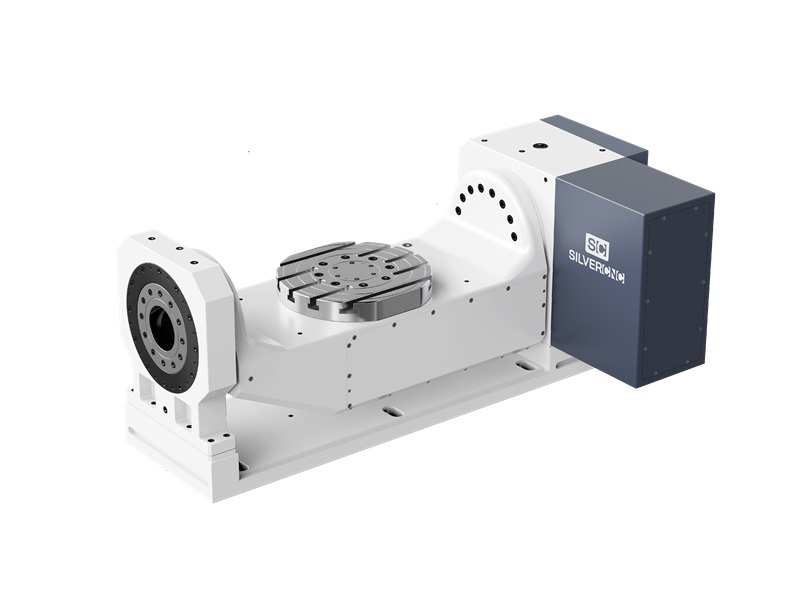

Most popular 3 kinds of table
The most significant upgrade is to enhance the machine tool’s functionality from three axes to four or five axes, enabling it to perform intensive machining such as four-axis or five-axis machining. Consequently, the CNC rotary table, as one of the main functional components of CNC machine tools, has become an ideal accessory for various types of CNC machine tools. It can be installed horizontally or vertically on the worktable of the CNC machine tool to serve as the fourth or fifth axis
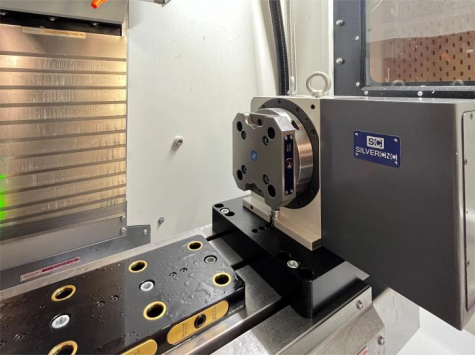
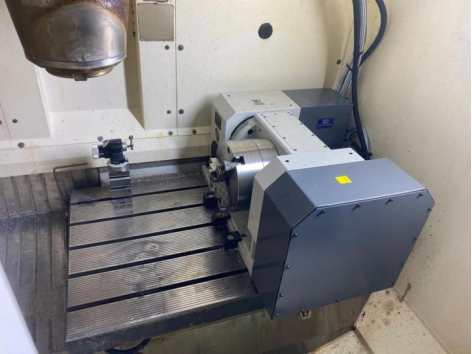
So, when choosing between a four-axis or five-axis rotary table during the machining process, how should you decide? Four-axis and five-axis rotary tables are equipment used in CNC machine tools for machining complex parts, and their main difference lies in the number of axes and motion capabilities. Here are some factors that might be considered when choosing between a four-axis or five-axis rotary table:
COST
Four-axis rotary tables are generally less expensive than five-axis rotary tables.
Five-axis rotary tables are more costly than four-axis rotary tables, including both the purchase price and maintenance expenses.
Ease of Operation
The operation and programming of four-axis rotary tables are relatively simple.
The operation and programming of five-axis rotary tables are typically more complex than those of four-axis rotary tables, often requiring more specialized operators.
Machining Requirements
When the machining of parts does not require complex movements more than three coordinate axes, a four-axis rotary table is selected.
Five-axis rotary tables are capable of more complex part machining, including intricate curves and angles. operators.
Part Shape
Four-axis is suitable for machining parts with relatively simple shapes that do not require complex continuous angular machining.
Five-axis is suitable for machining parts with complex shapes that necessitate multi-angle and continuous rotational machining.
Production Efficiency
Compared to four-axis rotary tables, five-axis rotary tables can complete more machining steps in a single clamping, reducing the number of clampings and improving production efficiency.
Space Constraints
If the worktable space is limited, the size of the four-axis and five-axis rotary tables must be taken into consideration.
Compatibility with Existing Equipment
Consider whether the new rotary table is compatible with the existing machine tools. If the machine tool only has four-axis function, then only a four-axis rotary table can be installed
Future Needs
Consider the long-term production needs, whether more advanced machining capabilities may be required in the future. If so, choose a five-axis rotary table.
Based on these factors, you can decide whether to choose a four-axis or a five-axis rotary table to meet your production needs. Before making a choice, it is best to conduct a detailed analysis of specific machining requirements, cost budgets, the technical level of operators, and expected production efficiency, etc. to choose the most suitable rotary table.